Why Your Website Gets Traffic but Does Not Convert Visitors into Leads
Your Website Gets Traffic. But It's Not Turning Into Leads. You open Google Search Console, and the curve is climbing. You check your CRM — and almost nothing has come in. No demo requests. A handful of contact form submissions that went nowhere. Traffic up; pipeline flat. This is the paradox that quietly drains founder …
Your Website Gets Traffic. But It’s Not Turning Into Leads.
You open Google Search Console, and the curve is climbing. You check your CRM — and almost nothing has come in. No demo requests. A handful of contact form submissions that went nowhere. Traffic up; pipeline flat.
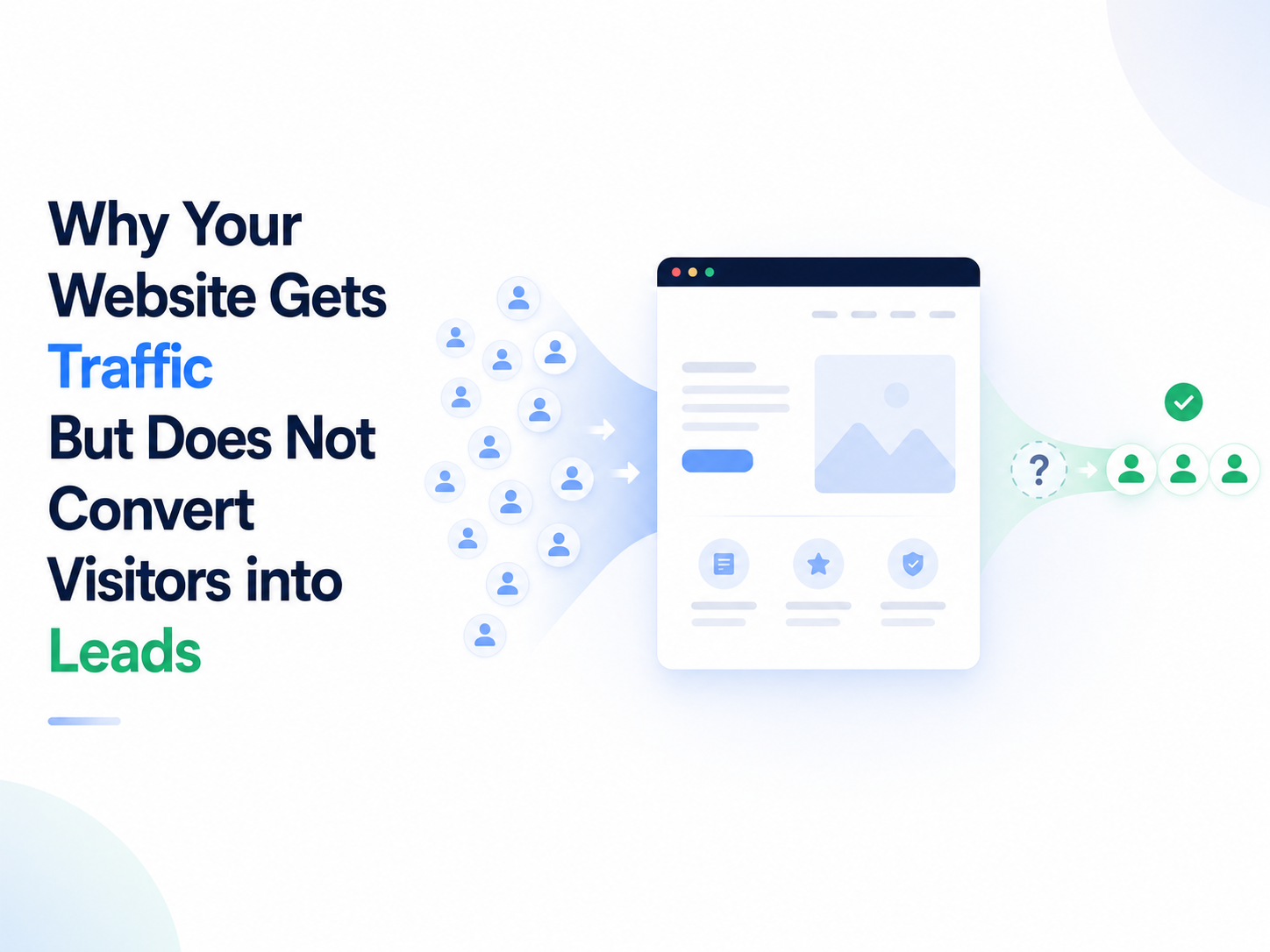
This is the paradox that quietly drains founder confidence and marketing budgets simultaneously. And it has a name: the Conversion Gap — the distance between a click and a lead, between a visitor and a prospect.
The instinct is to blame the website. Or the niche. Or the season. But the real cause is almost always structural, and it’s fixable once you know where to look.
Quick Answer: Why Is Your Website Getting Traffic but No Leads?
Traffic and conversion are two separate problems — and fixing one won’t fix the other. Your site may be failing to convert because of:
A value proposition that doesn’t pass the five-second clarity test
Traffic driven by informational intent, not buying intent
Missing or weak trust signals
A user journey with too many steps or friction points
CTAs that don’t tell visitors what happens when they click
Pouring more traffic into a site that isn’t built to convert will only make the problem more expensive. Read on for a full diagnosis and a step-by-step fix.
The Biggest Mistake: More Traffic Will Fix Everything
When conversion is low, most founders do the same thing: they scale acquisition. More ad spend. More content. More backlinks. The reasoning feels logical — if more people see the product, more people will buy.
This is the firehose-into-a-leaky-bucket fallacy, and it’s expensive.
Industry benchmarks for 2024 indicate that the average B2B website converts between 2% and 5% of its visitors into leads. If your site is sitting below 1%, you are not experiencing a traffic volume problem. You are experiencing a system failure — and adding traffic to a broken system doesn’t improve it. It amplifies the waste.
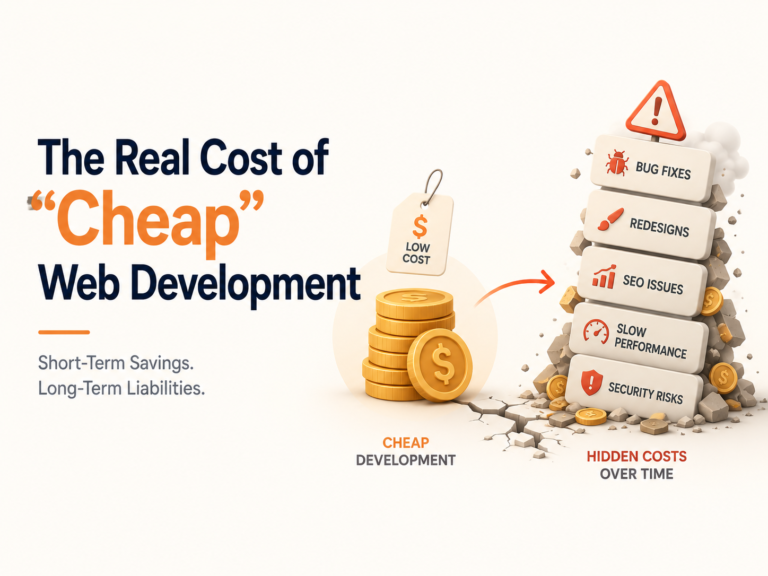
Every dollar spent on acquisition before fixing conversion is a dollar spent filling a bucket that can’t hold water.
Traffic and Conversions Are Two Different Problems
This distinction is the foundation of everything else in this article, and most founders skip past it.
Traffic is an acquisition problem. It lives at the top of the funnel and responds to channel strategy, keyword targeting, ad creative, and distribution. It answers the question: how do we get people here?
Conversion is a product and experience problem. It lives in the middle of the funnel and responds to clarity, trust, friction reduction, and message alignment. It answers a different question entirely: why would someone act once they arrive?
These two engines require different diagnoses and different interventions. A high-performing PPC campaign landing on a confusing page doesn’t convert — not because the campaign failed, but because you’ve sent the right traffic to the wrong experience. You cannot solve a UX problem by buying more visitors.
Why Website Conversion Depends on a System, Not a Single Fix
Here’s what most conversion advice gets wrong: it treats conversion as a discrete element — a button, a headline, a form. Change one thing, get more leads.
In reality, conversion is the outcome of three variables working in alignment:
Message — Does what your site communicates match what your visitor came looking for?
Audience — Is the person arriving on your page actually capable of becoming a buyer?
Friction — How many obstacles stand between their arrival and the action you want them to take?
When any one of these is off, conversion suffers. When two or all three are misaligned, the site effectively doesn’t work — regardless of how much traffic it receives.
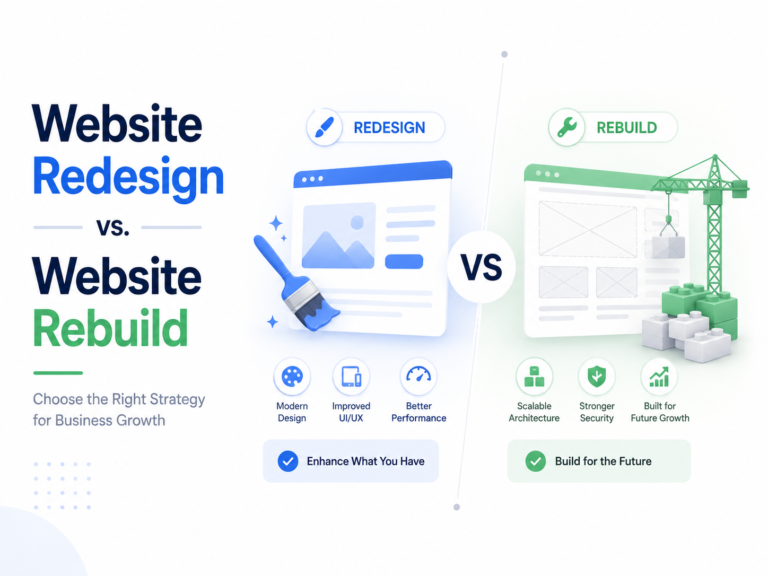
What your website needs, alongside its product messaging, is what practitioners call a Conversion Architecture: a deliberate, end-to-end design of the journey from arrival to action. Not a redesign. A system.
The next five sections diagnose exactly where that system breaks down.
Unclear Value Proposition: When Visitors Do Not Understand Your Offering
Apply the Blink Test: a first-time visitor should know what you do, who it’s for, and why it matters — within five seconds of landing on your page. No scrolling. No clicking. No reading the about page.
If your headline reads “Empowering businesses through innovative digital solutions” — you’ve failed before the user even forms an opinion.
A value proposition that converts is specific, outcome-focused, and immediately relevant to the buyer’s problem. Compare:
“We help B2B SaaS teams cut onboarding time by 40% with in-app guided flows” ✓
“A better way to onboard your users” ✗
The first gives the visitor a reason to stay. The second gives them nothing to hold onto. If your visitor can’t immediately place themselves in your offering, they don’t ask questions — they leave.
Misaligned Traffic: When You Attract Visitors Who Will Not Convert
Not all traffic is created equal, and volume without intent is vanity at its most costly.
Search intent exists on a spectrum. At one end: informational queries — “how does lead scoring work,” “what is a conversion funnel.” These visitors are learning. At the other end: transactional queries — “best lead scoring software for startups,” “conversion optimization agency pricing.” These visitors are buying.
If your SEOstrategy has optimized predominantly for informational keywords, you’ve built an audience, not a pipeline. Audit your top organic landing pages and the keywords driving them. If the majority begin with “how to,” “what is,” or “examples of,” you are attracting the wrong stage of the buyer for direct conversion.
This doesn’t mean informational content is worthless — it builds trust and authority over time. But it must be paired with a deliberate mechanism (a lead magnet, a content upgrade, a newsletter) to capture those visitors before they leave and never return.
Missing Trust Signals That Reduce Buyer Confidence
We are in what analysts have begun calling the 2026 Trust Economy — a market environment where buyers, particularly in B2B contexts, conduct deeper pre-purchase due diligence than at any prior point in internet history. Forrester’s 2024 B2B Buying Study found that the average buying group involves 13 or more internal stakeholders before reaching out to a vendor.
Your website needs to do trust-building work before a human conversation ever begins. That means:
Case studies with named clients, specific contexts, and measurable outcomes — not anonymous testimonials
Social proof — logos, third-party review badges (G2, Capterra, Trustpilot), and quantified results
Security and compliance signals were relevant — especially for SaaS products handling data
A visible human presence — a founder bio, a team page, a face on the homepage — signals accountability in a way that polished copy alone cannot
An anonymous website with no proof points loses deals to competitors who look more established, even when the product is superior. Trust is not a feature; it’s a prerequisite.
Broken User Journey: How Poor Structure Leads to Drop-Offs
Count the clicks between your homepage and your primary conversion goal. Now count them from your highest-traffic blog post. If either path requires more than two clicks to reach a high-intent action, you have structural friction that is costing you leads.
The research on this is consistent: each additional step in a conversion funnel introduces a meaningful drop-off probability, with the steepest abandonment occurring on forms exceeding three fields and on pages with competing or unclear navigation options.
The practical diagnostic: draw your actual user journey as it exists today — not as you intended it to be designed. Map every page, every click, every decision point. Identify where visitors exit using Google Analytics 4’s Funnel and Path Exploration reports or session recordings. In most cases, the drop-off isn’t where founders expect it to be.
The solution isn’t always a navigation redesign. Often it’s as simple as adding a direct CTA to your most-visited blog posts, shortening a contact form, or eliminating a confirmation step that served no purpose.
Ineffective Calls to Action That Do Not Drive Decisions
“Submit.” “Learn more.” “Get in touch.”
These phrases carry no promise and create no momentum. They ask the visitor to make a decision without giving them a reason to make it now, or a clear picture of what happens next.
Your CTA is the last impression before a visitor decides to act or leave. It should communicate what happens immediately and what value is received. Consider the difference:
“Get in Touch” → tells the visitor nothing
“Book a 20-Minute Strategy Call — Free” → tells them the format, the duration, and the cost
Strong CTAs complete the sentence: “I want to ___.” They are specific, low-commitment in framing, and outcome-anchored. Move every generic CTA on your site through this filter and rewrite accordingly. This single change, applied consistently across landing pages, often produces measurable lift within weeks.
When Traffic and Page Experience Don’t Match
Even when traffic intent is correct and volume is healthy, conversion fails when the page experience doesn’t meet the expectation set by the ad, search result, or link that brought the visitor there.
This is called message-to-page mismatch, and it’s more common than most founders realize. A visitor clicks a Google Ad promising “Free website conversion audit for B2B startups” and lands on a generic homepage with no mention of the audit. The cognitive dissonance is immediate — and the exit rate reflects it.
Every entry point into your site — every ad, every search snippet, every social post, every backlink — creates an expectation. The page that receives that visitor must fulfill it within the first scroll. If it doesn’t, the visitor’s brain registers the experience as a dead end, and they leave without exploring further.
Audit your top traffic sources against their destination pages. Ask: Does the language, the offer, and the visual hierarchy on the landing page directly continue the conversation started by the source? If not, you’re losing leads before the page even gets a chance to convert them.
How Conversion Gaps Expand as Your Traffic Scales
This is the compounding problem that makes early inaction so costly.
Consider a site with 10,000 monthly visitors converting at 0.8%. That’s 80 leads per month. At a blended Customer Acquisition Cost of $1,500 per lead, you’re spending over $1 million annually to generate that pipeline.
Now apply a conversion fix that moves the rate to a 2.5% — a highly competitive benchmark. Same traffic. Same spend. The output becomes 250 leads per month — more than 3x the output at no additional acquisition cost.
The inverse is equally true: as you scale traffic without fixing conversion, the absolute number of wasted sessions grows proportionally. A 1.7% conversion gap on 10,000 monthly visitors represents 170 lost leads per month. On 50,000 monthly visitors, that same gap represents 850. The cost of inaction compounds directly with growth.
This is why conversion optimization is not a cosmetic exercise — it is a financial leverage decision.
How AI-Powered Search Is Quietly Reshaping Your Conversion Funnel
The traffic your website receives in 2026 is fundamentally different from the traffic it received two years ago — and most founders haven’t adjusted their conversion strategy to reflect that.
Gartner projected that traditional search engine volume would decline by 25% by 2026 as AI-powered tools — Google AI Overviews, ChatGPT search, Perplexity — absorb a growing share of informational queries. What this means in practice: the visitors who still click through to your website have already passed through an AI filter. They’ve read a summary. They’ve compared options. They arrive with more context, sharper intent, and a shorter tolerance for pages that don’t immediately confirm they’re in the right place.
This changes the conversion equation in two specific ways.
First, zero-click searches have absorbed your top-of-funnel. Queries that previously drove informational traffic — “what is a conversion rate,” “how does lead scoring work” — are increasingly answered directly in AI Overviews without a click ever occurring. The implication: if your SEO strategy was built primarily on informational content, expect organic volume from that tier to decline. The traffic that remains is leaning transactional.
Second, AI-assisted research has raised the trust bar before first contact. According to a 2024 Forrester study on AI’s influence on B2B buying behavior, buyers who used AI tools in their research phase reported higher confidence in their shortlists — but also greater skepticism toward vendors whose websites lacked specific, verifiable proof points. A generic homepage with no case studies or concrete outcomes performs worse against an AI-primed buyer than it did against a cold search visitor.
The practical adjustment: structure your key landing pages so that AI search engines can parse and accurately represent your value proposition in summaries and overviews. Use clear semantic headers, specific outcome statements, and structured FAQ content. Pages that AI can summarize accurately are more likely to be cited — and the visitors who click through from those citations arrive pre-qualified. That is a conversion advantage, provided your page fulfills the expectation the AI summary created.
The compounding risk: if your page fails to match the AI-generated preview a buyer saw before clicking, the mismatch registers faster and exits happen sooner. The margin for vague messaging is narrower than it has ever been.
Quick Conversion Audit Checklist
Before working through the system in the next section, run this rapid diagnostic against your current website. Be honest — optimistic answers here cost you leads.
Check
Question
Clarity
Can a first-time visitor understand exactly what you do within 5 seconds — without scrolling?
Intent alignment
Is the majority of your organic traffic driven by buying intent, not just research queries?
Proof
Do you show verifiable proof — named case studies, measurable outcomes, or third-party reviews?
CTA specificity
Is your primary CTA specific enough that a visitor knows exactly what happens when they click it?
Path to conversion
Can a visitor reach your conversion goal — a form, a booking page, a demo — within 2 clicks from any entry point?
Scoring: If you answered no to two or more of these, your conversion system has a structural gap — not a traffic gap. The fix isn’t more spend; it’s the framework in the next section.
A note on using this checklist: Each item maps directly to one of the five conversion killers covered earlier in this article. A no on Clarity points to your value proposition. A no on Intent Alignment points to your keyword and content strategy. A no on Proof points to your trust architecture. Work through them in order — clarity before proof, proof before CTAs — because each layer depends on the one beneath it.
A Simple System to Turn Website Traffic into Leads
Fixing the Conversion Gap doesn’t require a full website rebuild. It requires a structured approach applied in the right sequence.
Step 1: Audit the Message-to-Market Match: Before touching design or copy, verify that the promise your marketing makes is consistent with what your website delivers. Use heatmaps (Hotjar, Microsoft Clarity) and session recordings on your highest-traffic pages to observe real visitor behavior. Watch for scroll depth drop-offs and rage clicks — they point to friction and confusion.
Step 2: Simplify the UI/UX: Map the minimum number of clicks required to reach your primary CTA from every major entry point. Remove everything that doesn’t move a visitor closer to that goal. The aim is not aesthetic minimalism — it’s cognitive clarity. Every additional decision a visitor faces is a micro-friction that reduces conversion probability.
Step 3: Implement Lead Magnets Strategically: Not every visitor is ready to become a lead today. A targeted lead magnet — a free audit, a benchmark report, a focused template — gives you a mechanism to capture intent from visitors in the research phase. This transforms informational traffic from a dead end into a nurture pipeline, extending your conversion window beyond a single visit.
Step 4: Test Iteratively with a Hypothesis: A/B testing without a clear hypothesis is noise. Before any test, define the variable, the expected direction of change, and the metric that determines success. Start with your highest-traffic, lowest-converting pages — that’s where the upside is largest. Test one variable at a time. Let data accumulate to statistical significance before acting on results.
When Conversion Problems Require Expert Intervention
There is a specific inflection point every founder eventually reaches: the moment when the opportunity cost of not fixing conversion exceeds the cost of bringing in expert help. It arrives earlier than most founders expect — usually long before the next funding round or the next traffic milestone.
Conversion architecture sits at the intersection of UX design, copywriting, analytics, funnel logic, and technical implementation. It is a specialized discipline. Attempting to self-diagnose and self-remediate across all of these simultaneously is not a good use of a founder’s time or attention.
A structured Conversion Audit — a diagnostic across your traffic sources, landing pages, funnel steps, CTA performance, and trust architecture — replaces guesswork with a prioritized action plan. It identifies the highest-leverage fix rather than asking you to rebuild everything at once.
The clearest signal that it’s time: you’ve had consistent traffic for 90 days or more, and your conversion rate hasn’t improved meaningfully despite changes you’ve already made.
Turning Website Traffic into a Predictable Lead Generation System
Traffic without conversion is not a growth engine — it’s a research report nobody asked for.
The founders who scale effectively treat their website as a systemic sales tool, not a digital brochure. They understand that the visitor journey is engineered, not accidental. That trust is built through proof, not promises. That conversion is the outcome of message clarity, audience alignment, and deliberate friction reduction — working together, not in isolation.
Your website already has visitors. The question is whether the system behind it is designed to turn them into leads. If it isn’t, you now know exactly where to start.
Ready to close your Conversion Gap? [Book a free Conversion Audit →]
Frequently Asked Questions About MVP Development Budgeting
The most common cause is intent mismatch — attracting visitors who are researching, not buying.
Other key issues include:
Unclear Messaging: Fails the five-second clarity test.
Missing Trust Signals: No proof or credibility for buyers.
Structural Friction: Long or confusing conversion paths.
Traffic volume is rarely the problem — traffic quality and experience usually are.
Industry benchmarks place B2B conversion rates around 1.2% – 2.8%.
For early-stage MVPs, a realistic target is:
0.5% – 1.5% starting range
If you’re below 0.5%, focus on improving conversion structure before increasing traffic.
Use behavioral tools to understand user actions:
Heatmaps & Recordings: Tools like Hotjar or Microsoft Clarity show clicks and scroll behavior.
GA4 Reports: Funnel and Path Exploration reveal drop-off points and navigation patterns.
These tools show why users leave, not just how many do.
Quick wins: CTA and copy changes can show trends in 2–4 weeks (on high-traffic pages).
Structural improvements: Navigation, landing pages, and funnels typically show clear results in 60–90 days.
Conversion optimization compounds faster than SEO, but requires patience across testing cycles.